
“Fly With The Wind”
Crate Diving at Home, Chapter 13
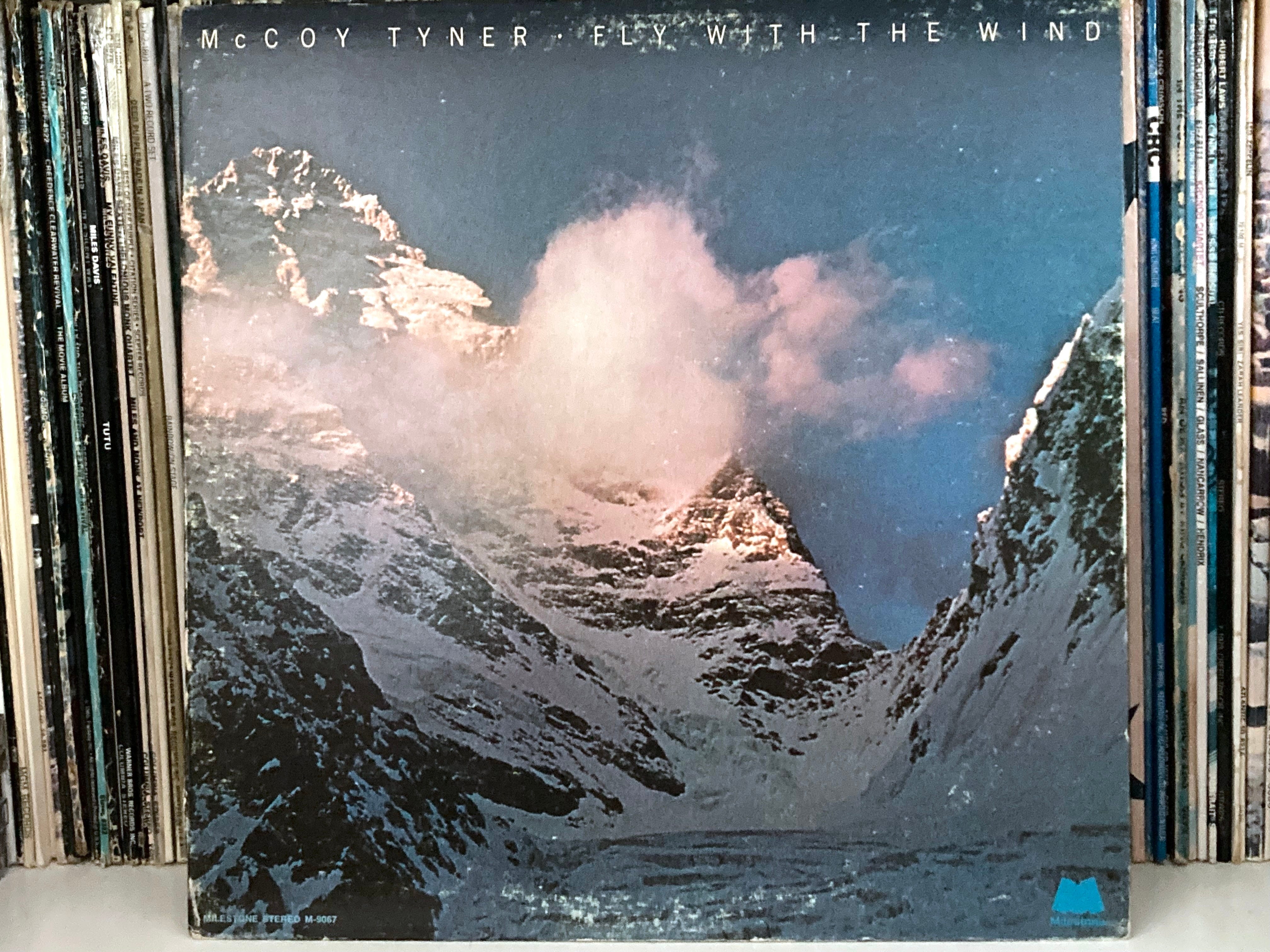
How do you discover new musical artists? If you are of a certain age, you probably heard a lot of music for the first time on the radio. If you liked something, maybe the radio DJ would say who the artist was. If you missed that, you would ask friends if they knew who did it. At some point you might be in a record store and look for that artist.
Or, perhaps, you had friends who were always playing records, and you heard something really captivating while hanging out with them. The next day, you made a beeline for the record store to buy a copy.
In my previous column, I wrote about discovering McCoy Tyner. I learned about him from my college musician friends. Tyner’s album “Trident” sounded like nothing I had heard before.
If you haven’t read that column, here it is:
https://medium.com/the-riff/a-sound-like-rain-and-distant-thunder-222833180d7e

Well, the same year I first heard “Trident”, Tyner released a follow-up album, and I just bought it without having heard any of it.
Listening to it for the first time was a strange experience. “Fly With the Wind” is completely different from its predecessor, yet it was immediately, unmistakably McCoy Tyner. How is this possible?
“Trident” is minimalist and spare, with just three musicians, no backing or embellishments. “Fly With the Wind” is lush, almost symphonic. Tyner brought in a small orchestra, with strings, woodwinds and a harp. The core ensemble is a quartet, comprising Tyner, Ron Carter (who had partnered with him on “Trident”), Billy Cobham on drums and Hubert Laws on flute.
Cobham had been a core member of Mahavishnu Orchestra, where he developed his own unique blend of explosive power and musicality. His 1973 debut solo album, “Spectrum,” was a surprise hit, crossing over to the mainstream charts and bringing fusion to a wide audience.
Laws was perhaps the leading jazz flautist in the world. Interestingly, though the flute is not a mainstream jazz instrument, I was already a fan, having heard some of his solo work before. His playing on this album is what makes it truly feel like you are flying.
Despite all the added instrumentation and the wall of sound, the overall style is still unmistakably Tyner’s. The wild cascades of notes, the weaving in and out of different keys, and the sense of exhilaration are all there, and then some. Cobham’s drumming adds a sense of drive and barely restrained chaos that completes the picture.
As a follow-up to “Trident,” “Fly With the Wind” is a stunning display of Tyner’s versatility and creative range. Critics have called it a masterpiece, and I can’t argue with that.
I’m not sure which album I like more. They’re just different.
Here is “Fly With the Wind”: