
Crate Diving at Home (Chapter 5)
The first album I went out and bought on my own
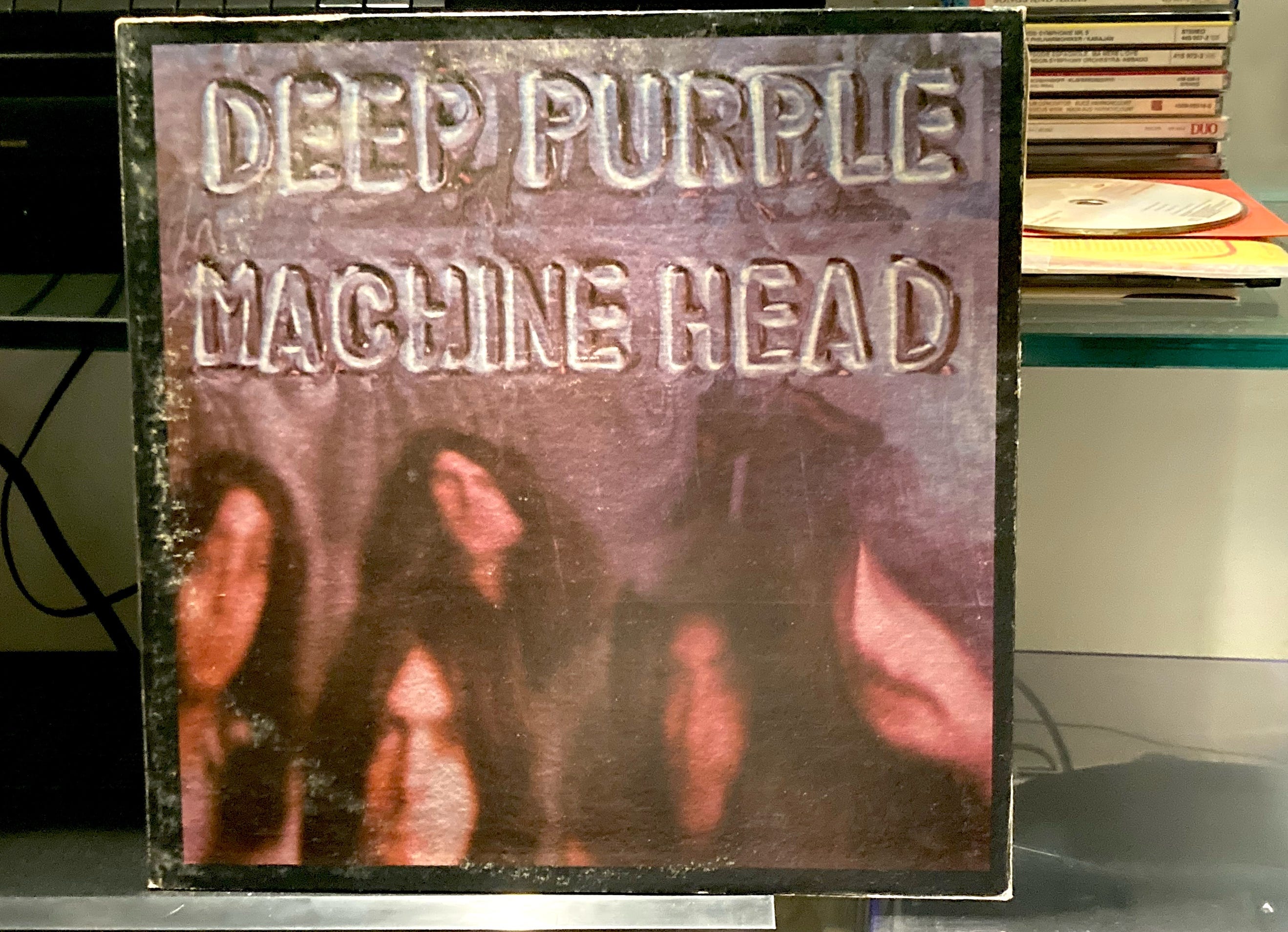
Some people say they know exactly when they graduated to having their own taste, whether it is art, music, clothes, food or whatever. For them there is a bright line that separates the before and the after. Where popular culture is concerned, many people view the “before” as unmitigated cringe, and the “after” as the good stuff.
I can’t conjure up such a clear dividing line. One reason is that I still listen to a lot of the music my parents listened to. To me there is nothing embarrassing about it.
It helps that my mom was an explorer herself. She listened to a lot of stuff her friends (and my friends’ parents) found mystifying. She discovered some of the emerging rock music that I would go on to fall in love with. You know, artists like the Beatles, the Doors, the Blues Project and Janis Joplin. They are part of my soundtrack to this day.
There was, of course, all the other stuff my friends and I swam in — top 40 radio, mostly pop hits, that co-existed with the rock and roll. Come to think of it, for awhile rock held its own, or better, on the radio and on the charts. It was part of the environment. There were those of us who liked Cream and Led Zeppelin, and those who preferred gentler stuff. But we were all drinking from the same fountain.
Then, one day, I heard something that felt like my own mind-blowing discovery. It was harder, heavier, and more aggressive than anything I had heard before, and it give me the chills.
I was hanging out with a bunch of the neighborhood kids at Marco’s house. His folks were Sicilian immigrants, and he was sort of the neighborhood tough guy. I learned never to refer to him as “Italian” — he hated that. He was Sicilian, dammit! He drove a car he had souped up himself, and was the first guy in our circle to have a girlfriend.
Marco always had music blasting from the garage where he worked on his car. On this particular day, after various other songs I can’t remember now, I heard the riff. A series of distorted guitar chords, repeated, and then a pounding, relentless bass line coming in underneath.
As loud as it was, it also felt as though the musicians were deliberately holding back, that if they really let loose, they would break something.
I asked who it was, and Marco handed me the album cover. The album was “Machine Head”, by a band called Deep Purple. The very title channeled industrial-age brutality. The song was “Smoke on the Water”, which would soon go on to hit #4 on the Billboard charts.
I was transfixed. We had all heard Zeppelin, and some of us were into Cream and Hendrix. They were extreme for their time, and had been pushing the boundaries, experimenting with technical virtuosity and the volume knob. But this was another level of controlled brutality.
The next time I could get to a record store (I didn’t yet drive) I scraped up my money and bought the album. The fact that it would become widely known was just icing on the cake for me.
The same year, Edgar Winter released “Frankenstein” (which briefly sat at #1). That, and “Smoke”, seemed to be opening up the door to a subterranean world. They were easily the hardest, darkest things that had ever gotten into regular rotation on the radio.
As I would later find out, Purple had found their stride after a lot of experimenting with different styles. They spoke to darkness and angst, not just through lyrics but through their instruments. Darkness and angst were very much my speed then.
They were ominous and heavy in a way Zeppelin weren’t. Yet they were also gleefully transgressive — their music was almost designed to piss off your neighbors. Not everyone was into them, but that didn’t matter. I had found my own band, one that spoke to me.
“Smoke on the Water” turned out to be their only big hit, if you go by metrics — but they had a large and highly engaged following. Among their fans, most of us agree that “Smoke on the Water” was not their best song, and wasn’t even the best song on “Machine Head.” For me, that honor goes to “Highway Star”.
If you take the lyrics literally, this is a song about a dude’s souped-up car. It could easily have been done in a surf-rock style. But it’s a little edgier than that — all the descriptions of the car are metaphors for his girlfriend. It’s unabashedly macho, knuckle-dragging stuff, delivered with a wink.
Actually, a lot of Deep Purple’s songs have silly, self-mocking lyrics (see, for example, “Who Do We Think We Are”)! They were able to laugh at themselves, even while cranking out some serious, and seriously heavy, music.
And this is the big hook for a lot of Purple fans: the music is not primitive. The composers, organist Jon Lord and guitarist Ritchie Blackmore, were classically trained. A lot of what they wrote leaned heavily on Baroque influences. The keyboard and guitar solos in “Highway Star” have been described as a mashup of Bach and Beethoven riffs, played backward.
Today, Purple, along with Zeppelin and Black Sabbath, are sometimes referred to as the “unholy trinity” of heavy metal. They sort of invented it. Of course, the term “metal” was not yet in use to describe what they were doing.
What they were doing was heavy rock in which the instruments are not just there to accompany the vocals — they are the main event. Real effort went into the compositions.
The writing appealed to music nerds. The loudness and heaviness channeled working class anger and frustration. Or, in my case, teen angst. Of course, today there are a lot of metal bands who are far louder and heavier.
I’ve gone into some of the history in this article about six classic bands of metal’s golden era:
https://medium.com/the-riff/how-i-learned-to-love-heavy-metal-3672129542b1

So, back to “Highway Star”. What is the highlight of the song? For me, it’s Blackmore’s solo. This is probably the first true metal shred solo. It is still considered highly technical, though today there are dozens of guitarists who can play it. You can find a lot of them on youtube. For its day, it was unprecedented.
Blackmore later said that part of him regretted this solo, because it helped set off an arms race among guitarists. Shredders are frequently accused of playing without soul, and Blackmore ruefully agrees. In the quest to play fast, many of them forgot about playing to the song.
If you listen to a lot of his other work, you will see (and hear) that he always plays what is right for the song. That is why I continued to follow his career after he left Deep Purple.
Highway Star may be the greatest hard rock song of all time. You are spot on about the musicianship. the interplay between the bass and drum (perfectly in synch) during Blackmore's guitar solo is incredible, especially some of the quick drum fills. Feels like the perfect song, until you hear it played on Made in Japan, where they take it to another level.
The other song from the album that really struck me was Lazy. the first time i heard it i was pulling into Trader Joe's parking lot (about three years after the album's release). the intro was unlike anything i had heard before, a blend of rock, jazz and funk. I sat in the parking lot with my car stereo blasting until the song ended.
I think we must have had a Deep Purple fan at our local AM radio station, because besides their breakout Hush and Smoke on the Water, I remember hearing Highway Star and Woman from Tokyo. My memories of that time are like yours -- the whole spectrum of pop, rock, and soul showing up on the local radio station like a free-for-all. What an exciting time it was for discovering all kinds of artists and music.
Enjoyed your story about Marco. I can just picture him!